Solar panel efficiency sounds like the most important number when you are comparing solar quotes. A higher-efficiency panel seems better, cleaner, and more advanced.
But for most homeowners, solar panel efficiency is only one part of the decision.
A high-efficiency panel can produce more electricity from the same amount of roof space. That matters if your roof is small, partially shaded, or has limited usable areas. But your actual solar savings depend on more than the panel label. Location, electricity rates, roof direction, shading, system size, incentives, utility rules, financing, and installer design all affect the final return.
This guide explains what solar panel efficiency really means, when it matters, when it does not, and how to compare panels in a way that supports better solar ROI decisions.
Before choosing a premium panel, run the numbers with the MySolarROI solar ROI calculator so you can compare efficiency, system cost, bill savings, and payback period together.
What Solar Panel Efficiency Actually Means
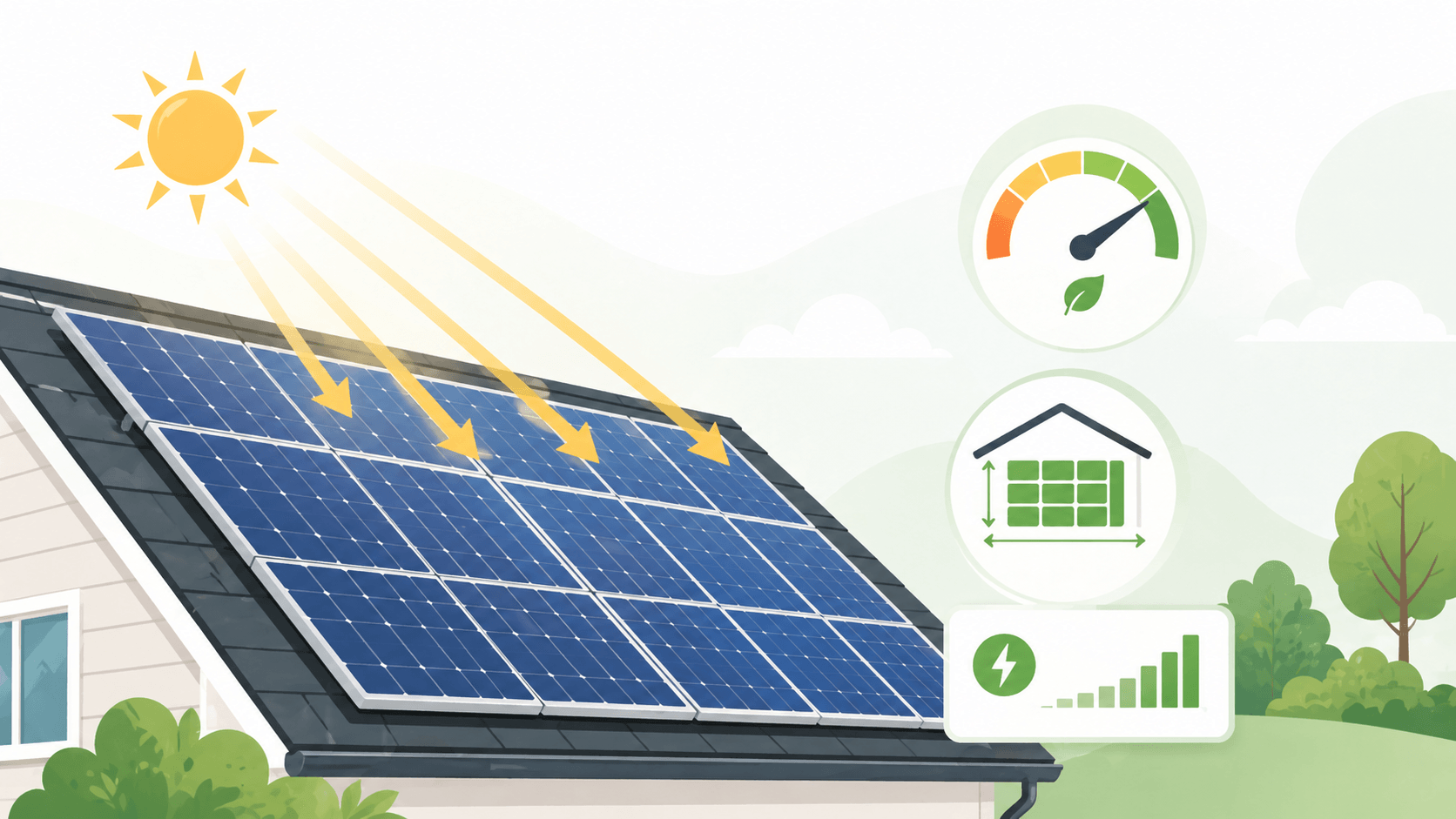
Solar panel efficiency measures how much sunlight a panel can convert into usable electricity. The U.S. Department of Energy defines photovoltaic conversion efficiency as the percentage of solar energy shining on a PV device that becomes usable electricity.
For example:
| Panel Efficiency | What It Means |
|---|---|
| 18% efficiency | Converts 18% of incoming sunlight into electricity under test conditions |
| 20% efficiency | Converts 20% of incoming sunlight into electricity |
| 22% efficiency | Converts 22% of incoming sunlight into electricity |
| 23% efficiency | Converts 23% of incoming sunlight into electricity |
In simple terms, if two panels are the same physical size but one is more efficient, the higher-efficiency panel can produce more watts from the same space.
That does not automatically mean it will give you the best financial return. The higher-efficiency panel may also cost more.
Solar Panel Efficiency vs. Solar Panel Wattage
Homeowners often confuse efficiency with wattage.
They are related, but they are not the same thing.
| Term | Meaning | Why It Matters |
|---|---|---|
| Efficiency | Percentage of sunlight converted into electricity | Shows how productive the panel is for its size |
| Wattage | Power rating of the panel under standard test conditions | Helps determine total system size |
| System size | Total watts or kilowatts installed | Drives annual solar production |
| Annual production | Estimated kWh generated per year | Directly affects savings and payback |
A 450-watt panel is not automatically better than a 400-watt panel. It depends on:
- Panel size
- Efficiency rating
- Installed cost
- Roof layout
- Inverter design
- Shade conditions
- Warranty and degradation
- How many panels your roof can fit
A large, lower-efficiency panel can have a high wattage simply because it is physically bigger. A smaller premium panel may have similar wattage because it uses space more efficiently.
What Is a Good Solar Panel Efficiency Rating?
For residential solar, many modern panels are around 20% efficient or higher, while top-performing residential panels can exceed 22%. EnergySage’s 2026 comparison notes that most panels are at least 20% efficient and that leading residential models can reach above 22%.
A practical way to think about efficiency:
| Efficiency Range | Homeowner Meaning |
|---|---|
| Below 19% | May be older, budget-focused, or less space-efficient |
| 19%–21% | Common range for many residential systems |
| 21%–22.5% | Strong performance for homes with moderate roof space |
| Above 22.5% | Premium efficiency, often useful for limited roof space |
The best choice is not always the highest percentage. A slightly lower-efficiency panel may be a better value if it costs less and your roof has enough room to meet your energy goals.
Why Higher Efficiency Can Matter
Higher-efficiency panels can be useful when roof space is the main constraint.
They may help if:
- Your roof is small
- Your usable roof area is limited by vents, chimneys, skylights, or dormers
- Your best roof planes are partially shaded
- You have high electricity usage
- You want to offset more of your bill with fewer panels
- Local rules limit system size or roof coverage
- You plan to add an EV, heat pump, or electric water heater later
In these cases, a higher-efficiency panel may allow your installer to fit more system capacity on the same roof.
That can improve annual production, but only if the extra production is worth the added cost.
When Solar Panel Efficiency Matters Less
Efficiency matters less when you have plenty of unshaded roof space.
For example, if your home can easily fit the system size you need using standard panels, paying extra for premium efficiency may not improve your payback period.
In that case, these factors may matter more:
- Total installed cost
- Cost per watt
- Annual kWh production
- Electricity rate
- Net metering or export credit rules
- Financing terms
- Installer quality
- Equipment warranty
- Roof condition
- Long-term system design
A 20.5% panel installed at a fair price can sometimes produce a better financial result than a 22.8% panel sold at a large premium.
Use the solar cost calculator to compare how system price affects payback before assuming the most efficient panel is the best deal.
The Factors That Affect Real-World Solar Panel Performance
The efficiency rating on a spec sheet is measured under standard test conditions. Your roof is not a lab.
Real-world performance depends on several factors.
1. Sunlight and Location
Solar panels produce more electricity in places with stronger solar resources. A 7 kW system in Arizona will usually produce more annual electricity than the same system in a cloudier northern location, assuming similar roof conditions.
That does not mean solar only works in sunny states. It means location affects the production estimate, which affects savings and payback.
2. Roof Direction and Tilt
The Department of Energy says solar panels typically perform best on south-facing roofs with a slope between 15 and 40 degrees, although other roofs can still be suitable.
East- and west-facing roofs can still work well, especially if your utility rates are higher during afternoon or evening hours. The best direction depends on your local rate plan, household usage pattern, and net billing rules.
3. Shade
Shade can reduce production more than a small difference in panel efficiency.
Common shade sources include:
- Trees
- Chimneys
- Nearby buildings
- Roof peaks
- Utility poles
- Dormers
- Satellite dishes
A partially shaded high-efficiency panel may produce less useful electricity than a standard-efficiency panel on a better roof plane.
4. Temperature
Solar panels need sunlight, but excessive heat can reduce electrical output. DOE notes that solar cells generally work best at lower temperatures and that higher temperatures can reduce voltage enough to lower performance.
This is why the panel’s temperature coefficient matters.
A lower temperature coefficient usually means the panel loses less output as it gets hotter. In warm climates, this can be an important quote comparison detail.
5. System Design
Panel efficiency is only one part of the system.
A good solar design also considers:
- Inverter sizing
- String layout
- Module-level power electronics
- Roof plane selection
- Fire setbacks
- Panel spacing
- Clipping assumptions
- Monitoring
- Future battery or EV needs
A well-designed system using solid mid-range panels can outperform a poorly designed system using premium panels.
6. Degradation Over Time
Solar panels slowly lose output as they age. A well-known NREL review of PV degradation rates found a median degradation rate of about 0.5% per year across many modules and systems.
That does not mean every panel will degrade at exactly that rate. Brand, climate, installation quality, maintenance, and product design can all affect long-term output.
When comparing quotes, look at:
- Product warranty
- Performance warranty
- Year 25 or year 30 output guarantee
- Manufacturer reputation
- Labor coverage
- Installer workmanship warranty
Solar Panel Efficiency and ROI: The Key Question
The real question is not, “Which panel is most efficient?”
The better question is:
Will the higher-efficiency panel produce enough extra savings to justify the higher price?
Here is a simple framework.
| Question | Why It Matters |
|---|---|
| Does my roof have limited usable space? | Higher efficiency may help fit more capacity |
| How much more does the premium panel cost? | Extra cost affects payback |
| How many extra kWh will it produce per year? | Extra production drives extra savings |
| What is my electricity rate? | Higher rates can make extra production more valuable |
| How are exported kWh credited? | Net metering or net billing changes savings |
| Will I use the extra power at home? | Self-consumption may matter under lower export credits |
| How long will I stay in the home? | Longer ownership gives more time to recover premium cost |
Electricity prices vary widely by state and utility. EIA’s Electric Power Monthly publishes residential electricity price data by state, showing that local rates can be very different across the country.
That is why the same high-efficiency panel may be financially worthwhile in one home and unnecessary in another.
Mini Case Study: Standard vs. Premium Efficiency Panels
This is a simplified example, not a guarantee.
Homeowner Assumptions
- Usable roof space: limited
- Standard panel system size: 10 kW
- Premium efficiency system size on same roof: 11.25 kW
- Extra system capacity: 1.25 kW
- Estimated annual production per installed kW: 1,300 kWh
- Electricity value: $0.18 per kWh
- Extra premium panel cost: $2,000
Simple Math
Extra annual production:
1.25 kW × 1,300 kWh = 1,625 extra kWh per year
Estimated extra annual value:
1,625 kWh × $0.18 = $292.50 per year
Simple payback on the premium cost:
$2,000 ÷ $292.50 = about 6.8 years
What This Means
In this example, the premium panels may be reasonable because the roof is space-constrained and the extra cost is moderate.
But change the assumptions and the answer changes quickly.
| If This Changes | Result |
|---|---|
| Extra premium cost rises to $5,000 | Payback becomes much longer |
| Utility export credits are low | Extra production may be worth less |
| Roof has plenty of space | Standard panels may achieve the same system size |
| Electricity rate is higher | Extra production may be more valuable |
| Homeowner moves soon | Less time to recover the premium cost |
The lesson: efficiency should be evaluated through annual production, cost, and savings—not just the panel label.
Use the solar panels calculator to estimate system size from your energy usage before deciding whether premium-efficiency panels are worth it.
How to Compare Solar Panel Efficiency in Quotes
When reviewing installer quotes, ask for more than the panel efficiency percentage.
Compare These Numbers Side by Side
| Quote Detail | What to Look For |
|---|---|
| Panel efficiency | Useful for roof-space comparison |
| Panel wattage | Helps determine system size |
| Number of panels | Shows how much roof area is used |
| Total system size | Key driver of annual production |
| Estimated annual kWh | More useful than efficiency alone |
| Installed cost | Determines upfront investment |
| Cost per watt | Helps compare quotes fairly |
| Temperature coefficient | Important in hot climates |
| Degradation warranty | Affects long-term output |
| Inverter type | Can matter for shade and monitoring |
| Estimated payback period | Connects production to savings |
| Assumptions used | Reveals whether the quote is realistic |
A quote that simply says “premium high-efficiency panels” is not enough. You want the numbers behind the claim.
Common Mistakes Homeowners Make
Mistake 1: Choosing the Highest Efficiency Without Checking Cost
A premium panel can be a good choice, but not if the added price outweighs the added production.
Compare the lifetime value of the extra kWh against the extra installed cost.
Mistake 2: Ignoring Shade
Shade can have a bigger impact than a 1–2 percentage point difference in panel efficiency.
Ask your installer for a shade analysis and roof-plane production estimate.
Mistake 3: Comparing Panel Wattage Without Panel Size
A higher-wattage panel may simply be larger. Compare wattage, efficiency, and dimensions together.
Mistake 4: Ignoring Utility Rules
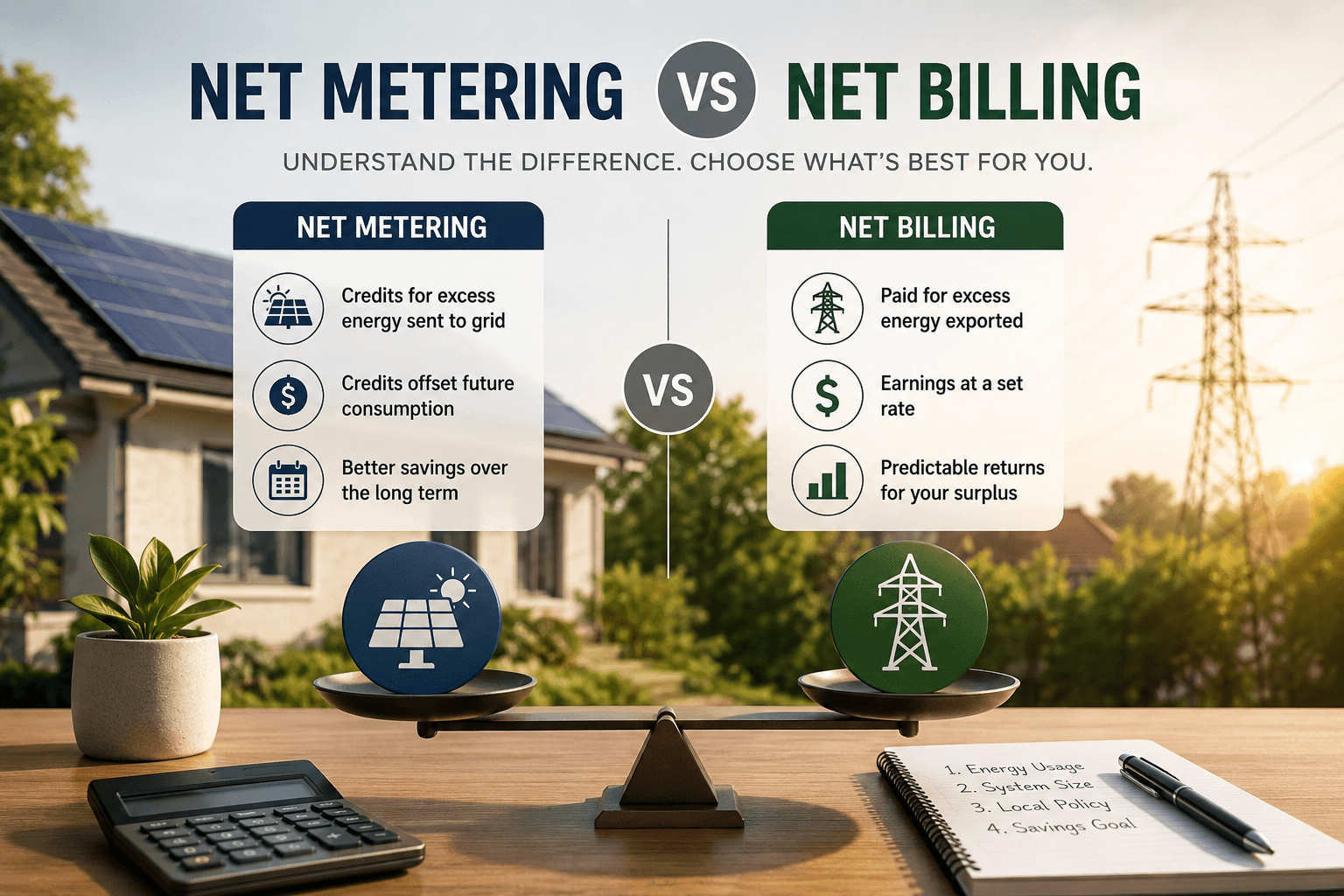
If your utility offers full-retail net metering, extra production may be valued differently than under net billing or avoided-cost export credits.
Panel efficiency should be considered alongside your utility’s credit structure.
Mistake 5: Forgetting Roof Condition
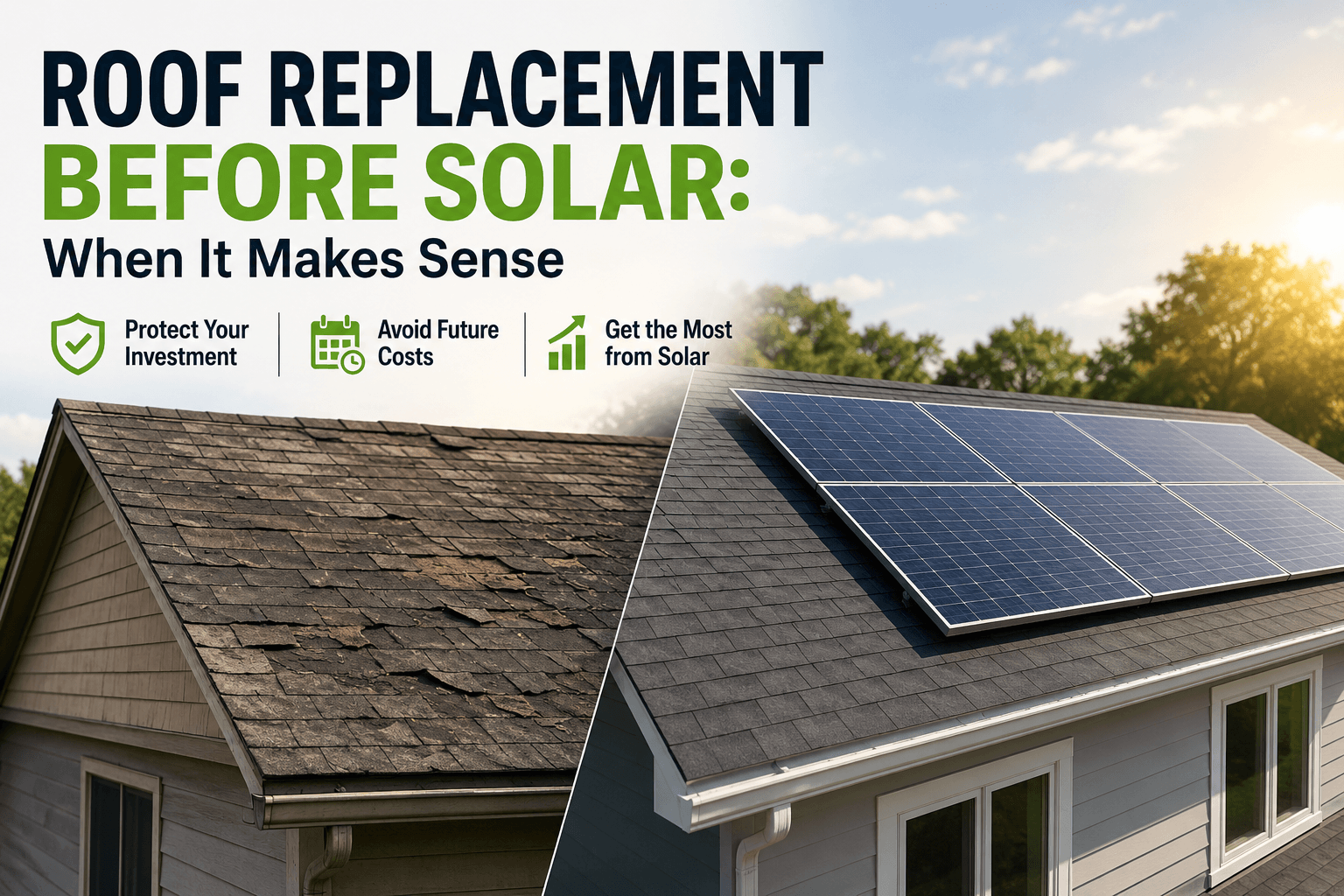
Solar panels can last decades, so installing on a roof that needs replacement soon can create avoidable removal and reinstallation costs.
If your roof is aging, roof work may matter more than chasing a premium panel.
Expert Tips for Homeowners
Before signing a solar contract, ask these questions:
- How much annual kWh will this system produce?
- How did you model shade, tilt, and roof direction?
- What is the cost per watt before and after incentives?
- How much extra production do premium panels add?
- What is the price difference between standard and premium panels?
- What panel degradation rate is assumed?
- What utility rate and export credit assumptions are used?
- How does financing affect the payback period?
- What happens if my electricity usage changes?
- Can you show the same design with a lower-cost panel?
The best quote is not always the cheapest or the most efficient. It is the one with clear assumptions, fair pricing, realistic production estimates, and equipment that fits your roof and savings goals.
When Premium-Efficiency Solar Panels Are Usually Worth Considering
Premium panels may make sense when:
- Roof space is limited
- Electricity rates are high
- Your home uses a lot of power
- You want to prepare for future electrification
- The added cost is modest
- The panel has strong warranty terms
- The installer can show clear extra production value
- A standard panel system cannot meet your target offset
When Standard-Efficiency Panels May Be the Better Value
Standard panels may be a better fit when:
- You have plenty of sunny roof space
- The system can already meet your usage needs
- Premium panels add little extra production
- The price difference is large
- Your utility export credits are low
- Your main goal is shortest payback
- The standard panel comes from a reputable manufacturer
For many homeowners, the “best” panel is not the most efficient panel. It is the panel that delivers the best balance of cost, production, warranty, and ROI.
FAQ
What is solar panel efficiency?
Solar panel efficiency is the percentage of sunlight a panel converts into usable electricity. A 20% efficient panel converts 20% of incoming sunlight into electricity under standard test conditions.
Is higher solar panel efficiency always better?
Not always. Higher efficiency can help when roof space is limited, but it may not improve ROI if the premium panel costs much more and your roof has enough room for standard panels.
What solar panel efficiency is good for a home?
Many modern residential panels are around 20% efficient or higher, while premium models can exceed 22%. The right choice depends on your roof space, budget, production needs, and payback goals.
Do efficient solar panels save more money?
They can, but only if they produce enough extra electricity to justify the higher cost. Savings also depend on your electricity rate, utility rules, incentives, financing, and how much solar power you use at home.
Does shade affect solar panel efficiency?
Shade affects real-world solar production. Even a high-efficiency panel can underperform if it is installed on a shaded roof plane. A good system design should account for shade before installation.
Do solar panels work better in hot weather?
Solar panels need sunlight, but high heat can reduce output. Temperature coefficient is important because it shows how much panel performance may decline as panel temperature rises.
Should I pay more for premium solar panels?
Premium panels may be worth it if your roof space is limited or your electricity rate is high. If your roof has plenty of room, a reputable standard panel may deliver a better payback period.
How do I know which solar panel quote is best?
Compare total system size, estimated annual kWh, cost per watt, panel warranty, degradation assumptions, inverter design, and payback period. Do not choose based on efficiency alone.
Conclusion
Solar panel efficiency matters, but it is not the only number homeowners should focus on.
A higher-efficiency panel can help you produce more electricity from limited roof space. But your actual savings and ROI depend on total system cost, annual production, electricity rates, utility credit rules, roof conditions, incentives, financing, and how long you plan to stay in the home.
The smartest approach is to compare efficiency in context.
Before paying extra for premium panels, estimate your system size, savings, and payback period with the MySolarROI solar ROI calculator. It can help you see whether higher solar panel efficiency actually improves your return—or whether a well-priced standard system is the better fit.