Is Solar Worth It? Honest Financial Guide for Homeowners

Is Solar Worth It ()
Find out if solar is worth it for your home by comparing cost, savings, payback period, roof conditions, incentives, and financing options.

If you are asking, “Is solar worth it?”, the honest answer is: sometimes, but not for every home.

Solar can be worth it for homeowners who have high electricity rates, a good roof for solar, a reasonable installer quote, useful incentives, and utility rules that give fair value for solar energy. It can be less attractive if your roof is shaded, your electric bill is already low, your quote is overpriced, financing costs are high, or you may move before the system pays for itself.

A solar salesperson may focus on monthly savings. A national article may focus on average payback periods. But the real question is more personal:

Will solar make financial sense for your home, your utility rate, your roof, your quotes, and your goals?

This guide explains when solar panels are usually more attractive, when they may be less attractive, and which numbers matter most before signing a solar contract.

Before making a decision, use the MySolarROI solar ROI calculator to estimate how system cost, electricity bill savings, incentives, financing, and payback period may affect your return.

Quick Answer: Is Solar Worth It?

Solar may be worth it if the long-term value of the system is greater than the upfront cost, financing cost, and risk.

For most homeowners, the decision comes down to a few questions:

  • How much will the solar system cost?
  • How much will it reduce your electric bill?
  • How long will it take to pay for itself?
  • What incentives actually apply to you?
  • How does your utility credit excess solar power?
  • Will financing costs reduce the return?
  • Is your roof a good fit for solar?
  • How long do you plan to stay in the home?

If the answers are favorable, solar may be a strong financial decision. If several answers are weak, it may be better to wait, improve efficiency first, get more quotes, or avoid signing a contract that does not make financial sense.

Solar Is More Likely Worth It When Solar May Be Less Attractive When
Your electricity rates are high Your electricity bills are already low
Your roof gets good sun exposure Your roof is shaded or needs major repairs
Your installer quote is fairly priced Your quote is significantly overpriced
You qualify for meaningful incentives Incentives are limited or uncertain
Your utility gives fair credit for solar exports Export credits are low or hard to understand
You plan to stay in the home long enough You may move before the system pays for itself
Financing terms are reasonable Loan fees or interest reduce most of the savings

What “Worth It” Really Means for Solar Panels

For some homeowners, “worth it” means the solar system produces a positive financial return. For others, it means lower monthly bills, more predictable energy costs, backup power with a battery, environmental benefits, or more control over household energy use.

This article focuses mainly on the financial side because that is what most homeowners want to understand before comparing quotes.

From a financial point of view, solar is usually worth reviewing if it can reasonably help you:

  • lower your long-term electricity costs
  • recover your net system cost within a reasonable time
  • produce positive lifetime savings
  • avoid overpaying for a system
  • compare quotes using consistent assumptions
  • understand the impact of incentives and financing

The most important point is this: solar is not worth it just because the monthly payment looks lower than your current electric bill. You need to understand the total cost, payback period, financing terms, and long-term savings.

The Main Factors That Decide Whether Solar Is Worth It

Solar value is personal because every home has different numbers. The same solar system can look attractive for one homeowner and weak for another.

1. Your Electricity Rate

Electricity rate is one of the biggest drivers of solar savings.

If you pay a high price per kilowatt-hour, each unit of solar electricity your system produces may be more valuable. If your electricity rate is low, the same solar production may save less money.

For example, a system that offsets 9,000 kWh per year may look very different under different rates:

Annual Solar Offset Electricity Rate Estimated Annual Value
9,000 kWh $0.12/kWh $1,080
9,000 kWh $0.18/kWh $1,620
9,000 kWh $0.28/kWh $2,520

This is a simplified example. Actual savings depend on your utility rate structure, fixed charges, time-of-use rates, net metering rules, and how much solar electricity you use directly at home.

For current electricity data, homeowners can review U.S. Energy Information Administration electricity information or their local utility bill. The EIA publishes official electricity data, including price information by sector and region. :contentReference[oaicite:2]{index=2}

2. Your Solar System Cost

Solar can be less attractive if the system is overpriced. That is why you should compare more than one quote.

When reviewing cost, look beyond the monthly payment. Ask for:

  • gross system cost
  • cash price
  • financed price
  • system size in kilowatts
  • cost per watt
  • included equipment
  • warranty terms
  • roof or electrical upgrade costs
  • dealer fees or financing-related price increases

Use the how to calculate solar ROI guide to compare total system cost against expected savings, not just monthly payment.

3. Your Roof Condition and Sun Exposure

A good roof can improve solar economics. A difficult roof can make the numbers weaker.

Important roof factors include:

  • shade from trees, chimneys, or nearby buildings
  • roof age and condition
  • roof orientation
  • roof pitch
  • usable roof area
  • local weather patterns
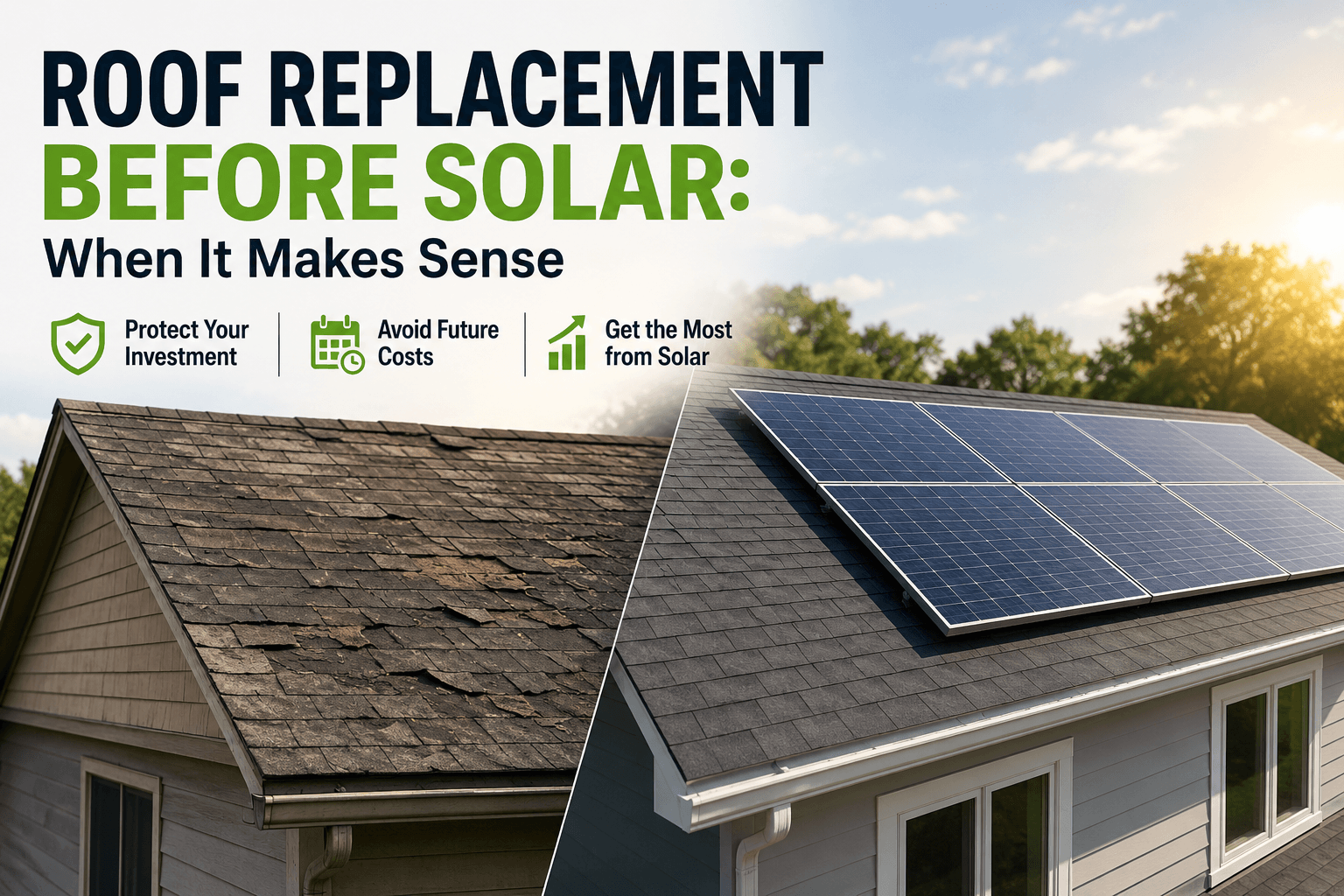
  • whether the roof may need replacement soon

The U.S. Department of Energy notes that qualified professionals and high-quality equipment are important when going solar, and homeowners should understand whether their home is suitable before moving forward. :contentReference[oaicite:3]{index=3}

If your roof needs major work soon, include that cost in your decision. Installing solar on a roof that may need replacement in a few years can create extra labor and removal/reinstallation costs later.

4. Solar Production Estimate

The more electricity your system can realistically produce, the stronger your potential savings may be.

Production depends on:

  • system size
  • location
  • shade
  • roof orientation
  • roof tilt
  • panel and inverter performance
  • system losses
  • weather
  • panel degradation over time

Do not accept a production estimate without asking how it was calculated. A useful quote should show expected annual production in kWh.

NREL’s PVWatts Calculator estimates the energy production and cost of energy for grid-connected photovoltaic systems and can help homeowners develop performance estimates for potential PV installations. :contentReference[oaicite:4]{index=4}

5. Incentives and Tax Credits

Incentives can improve solar economics, but only if you actually qualify and the program is still available when your system is installed.

Possible incentives may include:

  • federal tax credits
  • state incentives
  • local rebates
  • utility rebates
  • property tax exemptions
  • sales tax exemptions
  • renewable energy credits

Never assume an incentive applies just because it appears in a sales proposal. Incentive rules can change, funding can run out, and eligibility can depend on your tax situation, utility, location, system ownership, and installation date.

DSIRE describes itself as a comprehensive source of information on incentives and policies that support renewable energy and energy efficiency in the United States. :contentReference[oaicite:5]{index=5}

You can also use the solar tax credit calculator to compare incentive assumptions, but always verify current rules with official sources or a qualified professional.

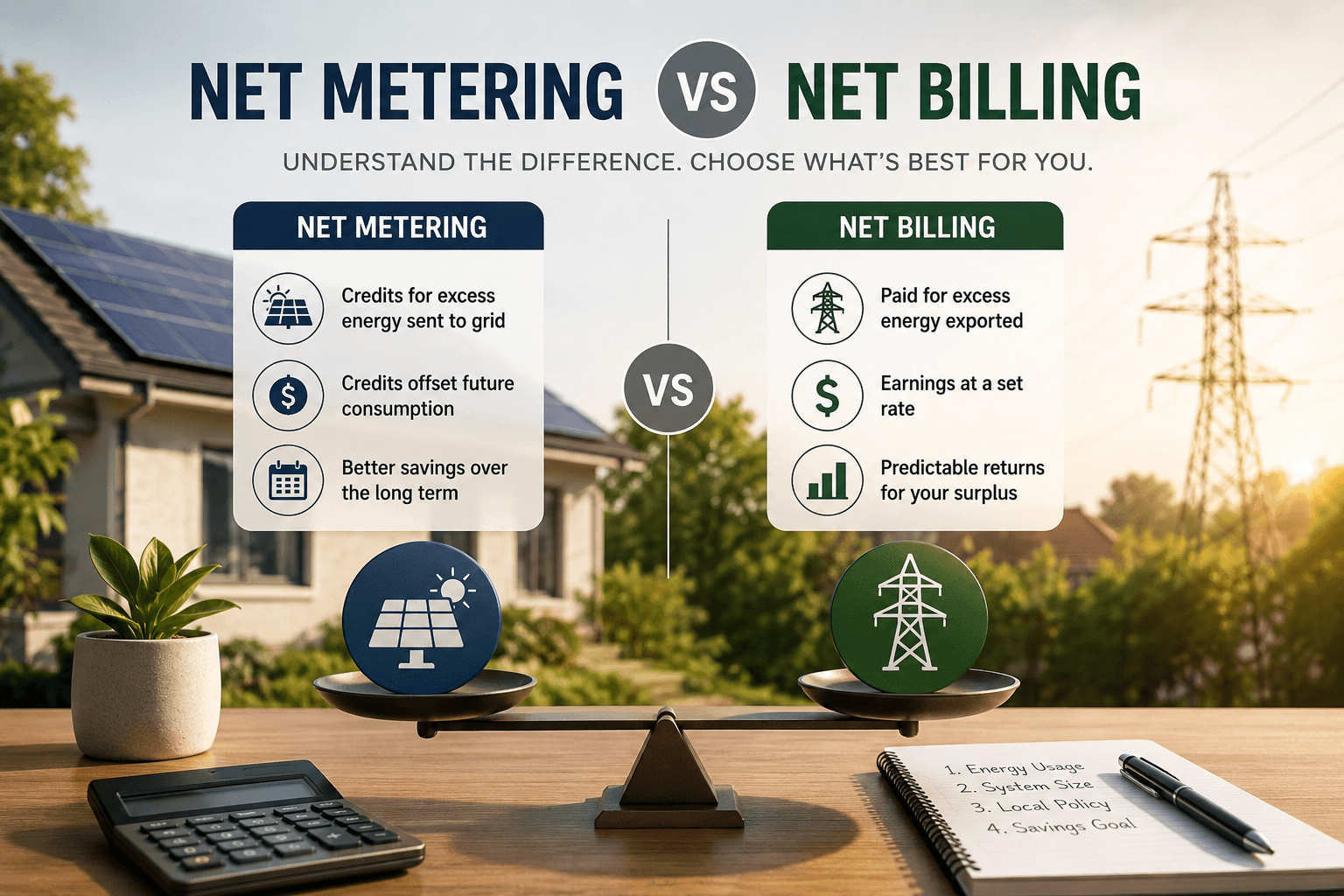
6. Net Metering and Solar Buyback Rules

Solar is usually more attractive when your utility gives fair credit for excess electricity your system sends to the grid.

However, not every utility credits exported solar energy the same way.

Utility Credit Type What It Means How It Can Affect Value
Retail net metering Exported solar earns credit near the retail electricity rate Often improves savings
Net billing Exported solar earns a separate export credit rate Savings depend on the export rate
Avoided cost credit Exported solar is credited at a lower utility cost-based rate May reduce savings
Limited or no export value Excess solar earns little or no credit Self-consumption becomes more important

If your export credit is low, solar may still be worth it, but the system should be designed carefully. Oversizing the system may be less attractive if extra production is exported at a low value.

Read the net metering explained guide before assuming your utility will credit solar energy at full retail value.

7. Financing Terms

Solar financing can make solar easier to install with less upfront cash, but it can also reduce ROI.

Review these financing details carefully:

  • cash price vs financed price
  • APR
  • loan term
  • dealer fee
  • monthly payment
  • total repayment amount
  • whether the loan assumes incentive paydown
  • whether the payment changes later

A low monthly payment does not always mean the best deal. A longer loan can lower monthly payments while increasing total interest paid.

Use the solar financing comparison guide to compare cash, solar loans, leases, and PPAs before signing.

8. How Long You Plan to Stay in the Home

Solar economics often improve the longer you use the system.

If your estimated payback period is 10 years and you plan to stay in the home for 20 years, the system may have more time to produce savings after payback.

If you may move in three years, solar can be more complicated. You need to consider resale value, buyer understanding, loan transferability, lease or PPA terms, and whether the system will be easy to explain during a home sale.

Mini Case Study: When Solar Might Be Worth It

Here is a simplified homeowner example. These numbers are illustrative, not guaranteed.

Actual results depend on location, utility rates, roof conditions, incentives, system design, financing terms, maintenance, and net metering rules.

Assumption Example Value
Gross system cost $24,000
Verified rebate $1,000
Net system cost before tax considerations $23,000
Estimated annual production 9,800 kWh
Electricity rate $0.18/kWh
Estimated first-year savings $1,764
Simple payback estimate About 13 years

Simple payback estimate:

$23,000 ÷ $1,764 = 13.0 years

This example may look reasonable for a homeowner who plans to stay in the home long enough and has fair utility credit rules. It may look weaker if financing costs are high, export credits are low, or the homeowner plans to move soon.

That is why you should not rely on one estimate. Run conservative, base, and optimistic scenarios.

Use the MySolarROI calculator to test different system costs, electricity rates, incentives, production estimates, and financing assumptions before comparing installer quotes.

When Solar Panels Are More Likely Worth It

Solar is more likely to be worth it when several financial and technical factors line up.

Favorable Factor Why It Helps
High electricity bills There is more potential for bill savings
High electricity rates Each kWh of solar production may be more valuable
Good roof exposure The system may produce more electricity
Fair system price Lower cost can shorten payback
Useful incentives Eligible incentives may reduce net cost
Strong utility credit rules Exported solar energy may be worth more
Reasonable financing Lower interest and fees preserve more savings
Long ownership period More years to benefit from the system

If most of these apply to your home, solar may deserve serious consideration.

When Solar Panels May Not Be Worth It

Solar is not automatically a good deal. It may be less attractive when the numbers are weak or the home is not a good fit.

Warning Sign Why It Matters What to Do
Low electric bill There may be limited savings to capture Consider energy efficiency first
Heavy roof shade Production may be too low Ask for a shade analysis
Old roof Roof replacement may add cost Get a roof inspection first
Overpriced quote Longer payback and weaker ROI Get multiple quotes
High financing fees Loan costs may reduce savings Compare cash and financed price
Weak export credits Excess solar may be worth less Check self-consumption and battery economics
Moving soon You may not benefit long enough Compare payback with ownership timeline

If several of these warning signs apply, solar may still be possible, but you should review the numbers carefully before signing.

Solar Worth It Checklist Before You Sign

Before signing a solar contract, review these items:

  • Do I understand the gross system cost?
  • Do I know the cash price and financed price?
  • Do I know the cost per watt?
  • Do I understand the annual production estimate?
  • Do I know which incentives are included?
  • Have I verified incentive eligibility?
  • Do I understand my utility’s net metering or buyback rules?
  • Do I know whether my roof needs repairs?
  • Have I compared at least two or three quotes?
  • Do I understand the warranty terms?
  • Do I know the estimated payback period?
  • Have I calculated solar ROI using realistic assumptions?

If you cannot answer these questions, slow down and ask for more information.

Common Mistakes Homeowners Make When Deciding If Solar Is Worth It

Mistake Why It Can Be a Problem Better Approach
Comparing only monthly payment It can hide high total cost or long loan terms Compare total cost, ROI, and payback
Assuming all incentives apply Eligibility may vary Verify with official sources
Ignoring roof condition Roof work may add major cost Inspect the roof before signing
Trusting one quote Pricing and assumptions vary Compare multiple quotes
Ignoring export credit rules Solar savings may be overstated Check utility net metering or buyback policy
Overlooking financing fees Fees and interest can reduce ROI Compare cash vs financed economics
Using unrealistic savings assumptions Payback may look better than reality Run conservative and base-case scenarios

How to Compare Solar Quotes Honestly

The best solar quote is not always the one with the lowest monthly payment.

Use the same assumptions for every quote so you can compare them fairly.

Quote Detail Why It Matters
System size Shows how much capacity you are buying
Annual production estimate Shows expected kWh output
Gross price Shows starting project cost
Net price Shows cost after assumed incentives
Cash price Helps compare base system cost
Financed price Shows whether financing increases cost
Equipment Panels, inverter, battery, monitoring, and warranties matter
Production guarantee Clarifies what happens if output is lower than estimated
Installer assumptions Shows whether savings estimates are realistic

You can also review the MySolarROI data sources to understand the types of assumptions that matter in solar savings and ROI estimates.

External Sources to Check

Before deciding whether solar is worth it, verify key assumptions with reputable sources.

These sources can help you avoid relying only on sales materials, outdated incentive claims, or generic national averages.


FAQ: Is Solar Worth It?

Is solar worth it for most homeowners?

Solar can be worth it for many homeowners, but not all. It is more likely to make sense when electricity rates are high, the roof gets good sun, the system price is fair, incentives apply, financing terms are reasonable, and the homeowner plans to stay long enough to benefit.

How do I know if solar is worth it for my home?

Start by comparing your system cost, expected annual production, electricity rate, utility credit rules, incentives, financing terms, and estimated payback period. A solar ROI calculator can help you test these assumptions before signing a contract.

Are solar panels worth it if my electric bill is low?

Solar may be less attractive if your electric bill is already low because there is less potential savings to capture. In some cases, energy efficiency upgrades may be a better first step before installing solar panels.

Is solar worth it if I finance it?

Solar can still be worth it with financing, but loan interest, dealer fees, and repayment terms can reduce ROI. Always compare the cash price, financed price, APR, total repayment amount, and monthly payment.

Is solar worth it with a battery?

A battery can provide backup power and more control over energy use, but it usually increases project cost. Solar-plus-battery should be evaluated separately from solar-only ROI because the financial return may be different.

Is solar worth it if I plan to move?

Solar may be less attractive if you plan to move before your estimated payback period. Before installing solar, consider ownership structure, loan or lease terms, resale factors, and how easy the system will be for a buyer to understand.

What makes solar not worth it?

Solar may be less attractive if your electric bills are low, your roof is shaded or needs major repairs, your quote is overpriced, financing costs are high, utility bill credits are weak, or you may move before the system pays for itself.

Should I get multiple solar quotes?

Yes. Getting multiple quotes helps you compare system size, price, equipment, warranties, financing, production estimates, and installer assumptions. Do not compare quotes only by monthly payment.

Conclusion

So, is solar worth it? For some homeowners, yes. For others, not yet.

The decision depends on your electricity bills, system cost, roof condition, incentives, net metering or buyback rules, financing terms, quote quality, and how long you plan to stay in the home.

Solar is usually more attractive when your bills are high, your roof is a good fit, your quotes are competitive, your utility rules are favorable, and your expected payback period fits your homeownership plans.

Solar may be less attractive when electricity usage is low, roof work is needed, financing costs are high, incentives are limited, or you may move before the system pays for itself.

A strong solar decision starts with realistic numbers.

Use the MySolarROI solar ROI calculator to estimate your solar savings, payback period, and ROI before comparing installer quotes.

Share the Post:

Related Posts