Federal Solar Tax Credit 2026: What Homeowners Need to Know

Federal Solar Tax Credit ()
Explain the current 2026 status of the federal residential solar tax credit, who may still qualify, and what homeowners should verify before using any tax credit in ROI calculations.

If you are researching the federal solar tax credit 2026, the most important thing to know is this: the residential federal solar tax credit does not work in 2026 the way many older solar articles and sales materials still describe it.

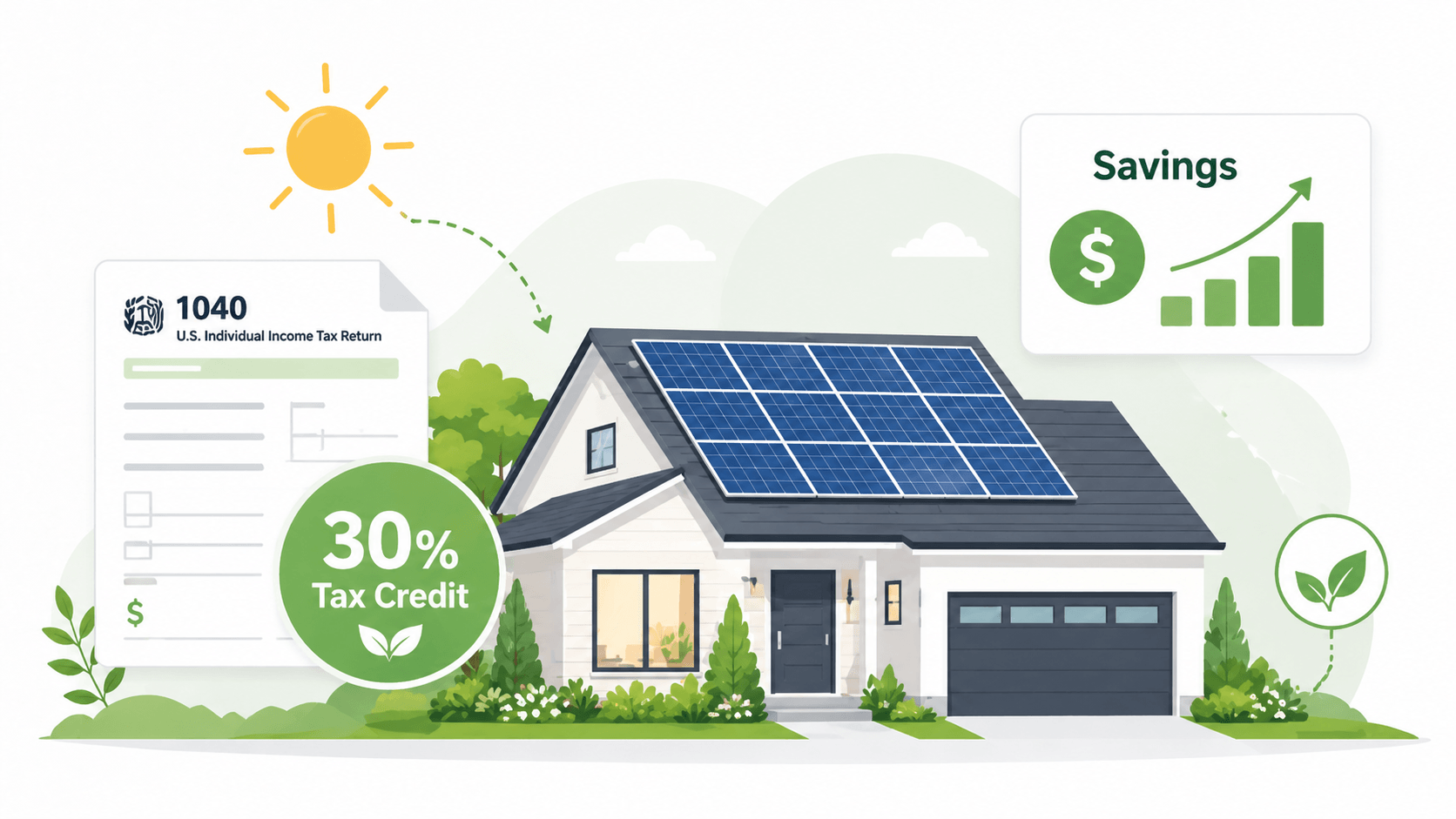
For years, homeowners heard that the Residential Clean Energy Credit could cover 30% of eligible solar costs. That was true for qualifying residential clean energy property installed from 2022 through December 31, 2025.

But under current IRS guidance, the credit is not available for property placed in service after December 31, 2025.

That means a homeowner evaluating a new 2026 solar installation should be very cautious about any proposal, calculator, or sales presentation that still subtracts a 30% federal residential tax credit from the price.

This guide explains what changed, who may still be dealing with the credit in 2026, what costs were generally eligible before the deadline, how Form 5695 works, and how to estimate solar ROI without relying on outdated federal incentive assumptions.

This article is educational only. It is not tax, legal, or financial advice. Confirm your situation with a qualified tax professional and official IRS guidance before filing or signing a solar contract.

Use the MySolarROI solar ROI calculator to compare your solar payback period and long-term ROI with and without verified incentives before speaking with installers.

Federal Solar Tax Credit 2026: The Key Update

The federal residential solar tax credit is formally part of the Residential Clean Energy Credit, also known as Section 25D.

The IRS states that the Residential Clean Energy Credit equaled 30% of the costs of new, qualified clean energy property installed from 2022 through December 31, 2025. The IRS also states that the credit is not available for any property placed in service after December 31, 2025.

In plain English:

Situation Likely Federal Residential Solar Credit Treatment What to Do
Solar installed and placed in service before January 1, 2026 The homeowner may be able to claim the credit if all IRS requirements are met Review IRS Form 5695 and speak with a tax professional
Solar contract signed in 2025 but system placed in service in 2026 Do not assume the federal residential credit applies Confirm timing and IRS rules before relying on the credit
New residential solar installation placed in service in 2026 Under current IRS guidance, the Section 25D credit is not available Model ROI without the federal residential credit
Lease or PPA The homeowner typically does not own the system Ask who owns the system and who receives incentives

The safest approach in 2026 is to calculate solar cost and ROI without automatically assuming a federal residential tax credit. Then add only incentives that you have verified for your state, utility, installation date, ownership type, and tax situation.

What Changed for the Residential Clean Energy Credit?

The Residential Clean Energy Credit previously allowed qualifying homeowners to claim a percentage of eligible residential clean energy property costs.

For solar, this often included qualifying solar electric property installed at a U.S. residence, subject to IRS rules and eligibility requirements.

Older articles may still say the federal residential solar tax credit continues beyond 2025. Homeowners should be careful with those claims because IRS guidance now reflects the accelerated end of the credit.

The IRS page for the Residential Clean Energy Credit says:

  • the credit equaled 30% of the cost of new, qualified clean energy property installed from 2022 through December 31, 2025
  • the credit is not available for property placed in service after December 31, 2025

This is why 2026 solar ROI estimates should not reuse older assumptions without checking the latest rules.

Does Signing a Solar Contract in 2025 Count?

Signing a contract is not the same as having a system placed in service.

The timing question matters because homeowners may have signed a solar contract before the deadline but not completed installation until 2026.

The IRS instructions for Form 5695 say a Section 25D expenditure is generally treated as made when the original installation of the item is completed. That means a homeowner should not assume that signing a contract or making a deposit in 2025 is enough by itself.

Action Why It Matters
Signed contract May not be enough if installation was not completed
Made deposit May not be enough by itself
Equipment delivered May still not mean the system was placed in service
Installation completed Timing may be relevant for IRS treatment
System placed in service Key timing concept for credit eligibility

If your project started in 2025 but finished in 2026, speak with a qualified tax professional before claiming or excluding the credit.

Who May Still Be Filing for the Credit in 2026?

Some homeowners may still be dealing with the federal solar tax credit in 2026 because they are filing a return for a prior tax year or handling a system that was installed before the deadline.

Examples may include:

  • a homeowner whose system was installed and placed in service in 2025
  • a homeowner filing a 2025 tax return in 2026
  • a homeowner with a valid unused credit carryforward from a prior year
  • a homeowner correcting or reviewing a prior-year filing
  • a homeowner confirming whether a 2025 project met IRS timing requirements

That is different from assuming a brand-new 2026 residential solar installation qualifies.

If your system was installed in 2025, review the IRS Form 5695 instructions for the relevant tax year and speak with a tax professional before filing.

What Costs Were Generally Included Before the Deadline?

For eligible systems before the deadline, qualifying costs generally related to new clean energy property installed at a qualifying residence, subject to IRS rules.

For solar projects, homeowners commonly looked at:

  • solar panels
  • inverter or microinverters
  • racking and mounting hardware
  • wiring and electrical work directly tied to the solar installation
  • permitting and installation labor
  • certain battery storage property if IRS requirements were met

However, homeowners should not assume every project cost qualifies.

Costs that may require careful review include:

  • roof replacement
  • structural work
  • general home repairs
  • financing fees
  • dealer fees
  • extended service contracts
  • utility charges not directly tied to qualified property

Do not rely only on an installer’s explanation of eligible costs. Use IRS instructions and qualified tax guidance.

Solar Batteries and the Federal Tax Credit

Battery storage became an important part of the Residential Clean Energy Credit rules before the deadline.

The IRS has stated that battery storage technology is qualified property if it has a capacity of at least 3 kilowatt-hours, subject to the applicable rules.

But for a new residential installation placed in service after December 31, 2025, homeowners should not assume the Section 25D residential clean energy credit is available under current IRS guidance.

Battery Situation Planning Note
Battery placed in service before January 1, 2026 May need review under the rules for that tax year
Battery added to a new 2026 residential solar project Do not automatically assume Section 25D applies
Battery included in lease or PPA Ask who owns the battery and who receives incentives
Battery included mainly for backup Evaluate backup value separately from tax assumptions

If you are considering a battery in 2026, calculate solar-only and solar-plus-battery ROI separately.

How the 2026 Tax Credit Change Affects Solar ROI

The federal solar tax credit previously reduced net cost for many qualifying homeowners. If that assumption is removed from a 2026 estimate, payback period may become longer and ROI may become lower.

Here is a simplified example:

Scenario Gross System Cost Federal Residential Credit Assumed Net Cost Before Other Incentives
Old-style estimate using 30% credit $24,000 $7,200 $16,800
2026 estimate without federal residential credit $24,000 $0 $24,000

This difference can meaningfully change the payback period.

If annual savings were estimated at $1,800:

Scenario Net Cost Annual Savings Simple Payback
With assumed 30% credit $16,800 $1,800 9.3 years
Without federal residential credit $24,000 $1,800 13.3 years

This example is simplified and does not include state incentives, utility rebates, financing, panel degradation, maintenance, or utility rate changes. It is meant to show why outdated tax credit assumptions can make a quote look better than it really is.

For a complete calculation, use the how to calculate solar ROI guide.

How to Estimate Solar ROI Without the Federal Credit

If you are evaluating a new residential solar installation in 2026, start with a no-federal-credit scenario.

Use this process:

  1. Start with the gross installed system cost.
  2. Separate the cash price from the financed price.
  3. Remove any automatic 30% federal residential credit assumption.
  4. Add only verified state, local, or utility incentives that apply to you.
  5. Estimate annual solar production.
  6. Estimate annual electricity bill savings.
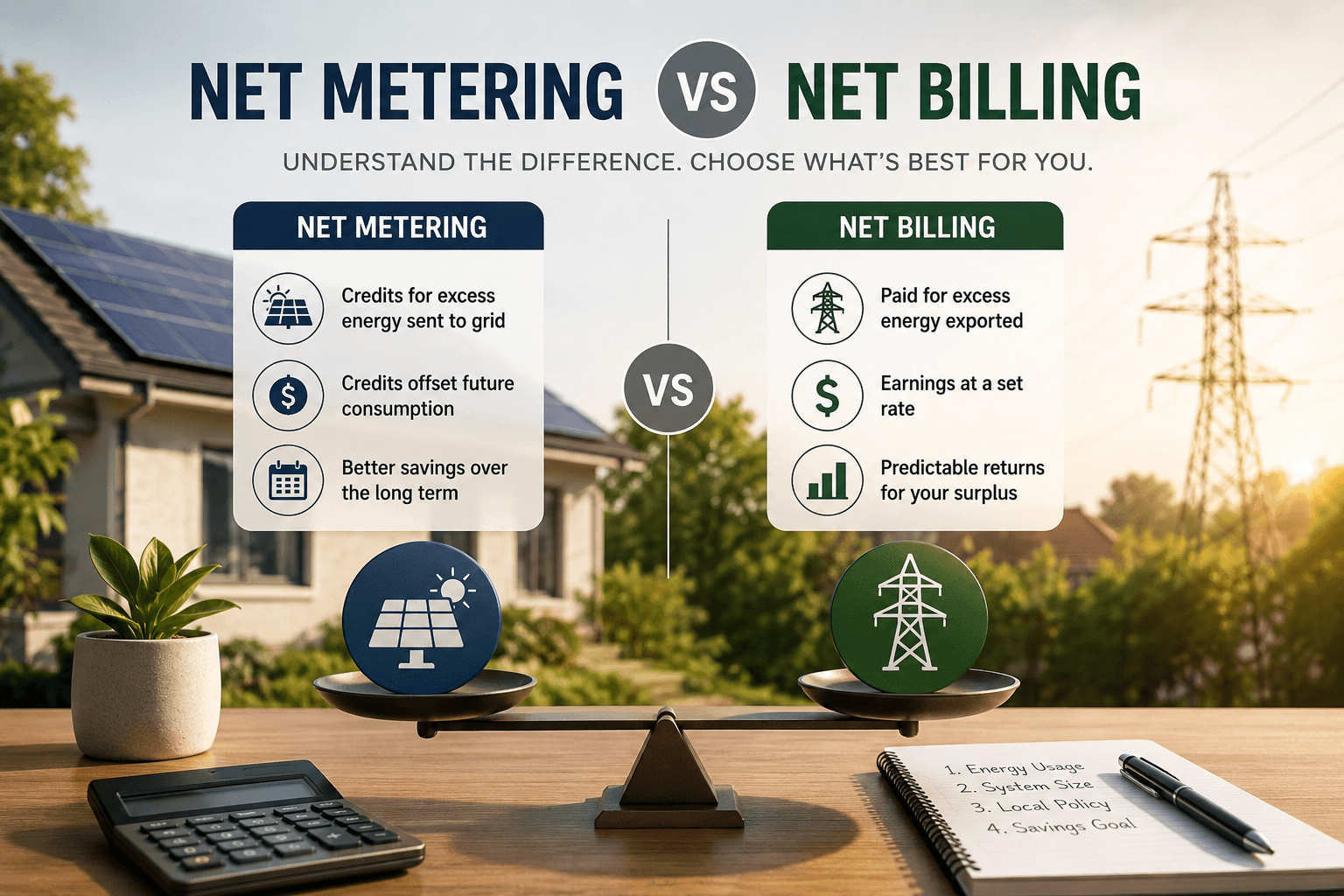
  7. Include net metering, net billing, or solar buyback rules.
  8. Include financing costs if you are using a loan.
  9. Calculate simple payback period.
  10. Calculate long-term solar ROI.

Use the solar panel cost 2026 guide to understand the gross cost side of the calculation, and use the solar financing comparison guide to understand how loans, leases, and PPAs can affect the numbers.

State, Local, and Utility Incentives May Still Matter

The end of the federal residential solar credit does not mean every solar incentive disappeared.

Depending on where you live, there may still be:

  • state solar rebates
  • local incentives
  • utility rebates
  • battery incentives
  • sales tax exemptions
  • property tax exemptions
  • renewable energy credit programs
  • special financing programs

Rules vary by state, utility, installation date, equipment type, ownership structure, and funding availability.

For incentive research, DSIRE is a useful starting point because it tracks renewable energy and energy efficiency incentives and policies in the United States.

You can also use the solar tax credit calculator to test incentive scenarios, but confirm eligibility with official sources before relying on any incentive in your final decision.

Ownership Matters: Cash, Loan, Lease, or PPA

Incentive treatment can depend on who owns the system.

With a cash purchase or solar loan, the homeowner usually owns the solar system. With a lease or power purchase agreement, the solar company or financing company usually owns the system.

Financing Type Who Usually Owns the System? Incentive Question to Ask
Cash purchase Homeowner Which incentives may I qualify for directly?
Solar loan Homeowner, with loan obligation Does the loan assume any incentive paydown?
Solar lease Solar company or financing company Who receives incentives and how are they reflected in my payment?
Solar PPA Solar company or financing company Are incentives reflected in the PPA rate?

Do not assume you personally receive a tax credit if you do not own the system.

Mini Case Study: 2026 Solar Quote With Outdated Tax Credit Assumption

Here is a simplified example. These numbers are for illustration only and are not guaranteed.

Actual results depend on location, system cost, roof conditions, utility rules, incentives, financing, electricity rates, tax situation, installation timing, and system design.

Quote Assumption Sales Presentation Careful 2026 Review
Gross system cost $26,000 $26,000
Federal residential credit $7,800 assumed $0 assumed for new 2026 installation unless verified otherwise
State or utility incentive Not clearly shown Only included if verified
Net cost used in payback $18,200 $26,000 before verified non-federal incentives
Estimated annual savings $2,000 $2,000 if utility assumptions are verified
Simple payback 9.1 years 13.0 years before verified non-federal incentives

The system may still make sense for some homeowners. But the decision should be based on current assumptions, not an outdated federal credit.

Before signing, ask the installer:

  • Does this quote subtract a federal residential solar tax credit?
  • What installation date or placed-in-service date is assumed?
  • Which tax year does this assumption apply to?
  • Who owns the system?
  • Which incentives are guaranteed, and which are only estimates?
  • What happens to payback if the federal credit is removed?

Run both versions in the MySolarROI calculator: one with only verified incentives and one with any disputed or uncertain incentives removed.

Common Mistakes With the Federal Solar Tax Credit in 2026

Mistake Why It Matters Better Approach
Assuming the old 30% credit applies to new 2026 systems Can make net cost and payback look too optimistic Model 2026 ROI without the federal residential credit unless verified
Confusing contract date with placed-in-service date Signing a contract may not be enough Confirm installation completion and IRS timing rules
Including unverified incentives May understate real cost Use only incentives confirmed by official sources
Assuming lease or PPA customers receive the homeowner credit Ownership affects incentive treatment Ask who owns the system and who receives incentives
Relying on old articles or sales slides Tax rules changed Check current IRS guidance
Treating a calculator as tax advice Calculators cannot confirm personal eligibility Use calculators for planning and professionals for tax decisions

Questions to Ask Before Using a Tax Credit in Your Solar ROI

Before including any tax credit or incentive in your solar ROI calculation, ask:

  • What exact incentive is being included?
  • Is it federal, state, local, or utility-based?
  • What law, program, or tariff supports it?
  • Is the incentive still available?
  • What installation or placed-in-service deadline applies?
  • Do I have to own the system?
  • Does my tax situation affect eligibility?
  • Is the incentive refundable or nonrefundable?
  • Can unused credit be carried forward?
  • Who receives the incentive in a lease or PPA?
  • Is this amount guaranteed or estimated?
  • What happens to ROI if the incentive is removed?

If the quote cannot answer these questions clearly, treat the incentive as uncertain until verified.

External Sources to Check

Before relying on any solar tax credit or incentive estimate, verify the current rules with official sources.

FAQ About the Federal Solar Tax Credit 2026

Is there a federal solar tax credit in 2026?

For a new residential solar installation placed in service after December 31, 2025, homeowners should not assume the federal Residential Clean Energy Credit applies. Current IRS guidance says the credit is not available for property placed in service after December 31, 2025.

Was the federal solar tax credit 30%?

Yes, for qualifying residential clean energy property installed from 2022 through December 31, 2025, the IRS says the Residential Clean Energy Credit equaled 30% of the cost. That does not mean new 2026 residential installations automatically qualify.

Can I still file for the solar tax credit in 2026 for a 2025 installation?

Possibly, if the system was installed and placed in service in 2025 and all IRS requirements are met. The IRS says homeowners generally claim the credit for the tax year when the property is installed, not merely purchased.

Was the federal solar tax credit refundable?

No. The IRS says the Residential Clean Energy Credit is nonrefundable, meaning it cannot exceed the amount you owe in tax. Excess unused credit may be carried forward to reduce tax owed in future years, subject to IRS rules.

Do solar batteries qualify for the federal tax credit in 2026?

For new residential property placed in service after December 31, 2025, the Section 25D residential credit is not available under current IRS guidance. For eligible prior-year systems, battery storage technology beginning in 2023 was listed as qualified property if it met capacity requirements.

Do solar leases qualify for the homeowner tax credit?

In a typical lease or PPA, the homeowner does not own the system, so the homeowner generally should not assume they personally receive ownership-based tax credits. Contract terms matter, so ask who owns the system and who receives incentives.

Do state solar incentives still exist in 2026?

Some state, local, and utility incentives may still exist, but rules vary by location and program. Check DSIRE, your state energy office, and your local utility for current program details.

Should I include the federal tax credit in my 2026 solar ROI calculation?

For a new residential installation placed in service in 2026, you should generally model ROI without the Section 25D federal residential credit under current IRS guidance. Then add only verified state, local, or utility incentives that apply to your situation.

Conclusion

The key takeaway for the federal solar tax credit 2026 is simple: homeowners should not assume the old 30% residential federal solar credit applies to new 2026 installations.

Under current IRS guidance, the Residential Clean Energy Credit was 30% for qualified clean energy property installed from 2022 through December 31, 2025, and it is not available for property placed in service after December 31, 2025.

That does not mean solar is automatically a bad financial decision in 2026. It means the math needs to be honest.

Before signing a solar contract, confirm whether the proposal assumes a federal tax credit, check state and utility incentives, compare cash and financed prices, and calculate payback without outdated assumptions.

Use the MySolarROI solar ROI calculator to estimate solar savings, payback period, and long-term ROI using current incentive assumptions.

Share the Post:

Related Posts